
Last updated: November 14, 2026.
Revani is a semolina cake soaked in lemon syrup — soft, golden and moist, with a fine crumb and a bright citrus finish. This revani recipe is the classic Turkish and Greek version: semolina, flour, eggs and yogurt baked in one dish, then soaked in a lemon syrup that the hot cake drinks up as it cools. It feeds twelve, it is easy to make the day before, and it is the cake people ask about.
If you have never made revani at home, this is the version to start with. The whole secret is the syrup timing: make the syrup first, let it cool while the cake bakes, and pour it over the cake the moment it comes out of the oven — cool syrup, hot cake. Pour too fast and the syrup pools; pour slowly, in rounds, and the whole cake turns evenly moist.
Revani belongs in our baking dessert recipes collection, and it is the cake to make when kunafa and baklava are already on the table — the soft, syrupy half of the spread. If you are still choosing what to bake, our dessert recipes hub has the full list of ideas.
Why You’ll Love This Revani
- Moist, never dry. The lemon syrup soak keeps the crumb moist for days — this is the cake that cannot dry out.
- One dish, no frosting. Bake, pour, cool — a sprinkle of coconut or pistachios is the whole decoration.
- Feeds a crowd. One 9×13 dish serves 12 squares, and the recipe is the perfect size for a gathering.
- Make it ahead. Revani is at its best the next day, once the syrup has fully settled into the crumb.
- A pinch of citrus. Lemon zest in the batter and lemon in the syrup give the cake its bright, fresh finish.
Ingredients
Cake
- 250 g (1 1/2 cups) fine semolina — where to buy
- 125 g (1 cup) all-purpose flour
- 200 g (1 cup) granulated sugar
- 4 large eggs, room temperature
- 240 ml (1 cup) plain yogurt (plain whole-milk yogurt, not Greek-style)
- 120 ml (1/2 cup) neutral oil, such as sunflower or vegetable
- 1 tablespoon baking powder
- 1 teaspoon vanilla extract — where to buy
- 1 lemon, zested (about 1 tablespoon zest)
- 1/4 teaspoon fine salt
Lemon Syrup
- 400 g (2 cups) granulated sugar
- 480 ml (2 cups) water
- 1 tablespoon lemon juice, freshly squeezed
- 1 strip lemon peel, optional, for the syrup
To Top
- 30 g (about 1/4 cup) shredded coconut — where to buy — or crushed pistachios — where to buy, for topping
Equipment
- 9×13-inch (23×33 cm) baking dish — where to buy
- Large mixing bowl — where to buy
- Whisk — where to buy
- Medium saucepan — where to buy
- Parchment paper, for lining the dish — where to buy
- Measuring cups and spoons
How to Make Revani
Step 1 — Make the Syrup First
Combine the sugar, water, lemon juice and lemon peel (if using) in a medium saucepan. Bring to a boil over medium heat, stirring until the sugar dissolves, then simmer for 5 minutes. Remove from the heat and set aside to cool — the syrup should be cool when it meets the hot cake.
Step 2 — Heat the Oven and Prepare the Dish
Heat the oven to 175°C (350°F). Grease a 9×13-inch (23×33 cm) baking dish, or line it with parchment paper, leaving an overhang on the long sides for lifting the cake out later.
Step 3 — Whisk the Dry Ingredients
Whisk the semolina, flour, sugar, baking powder and salt together in a large bowl until evenly mixed. Stir in the lemon zest.
Step 4 — Make the Batter
In a second bowl, whisk the eggs, yogurt, oil and vanilla together until smooth and pale, about 1 minute. Pour the wet mixture into the dry ingredients and stir just until no dry streaks remain — do not overmix, or the cake turns tough. Scrape the batter into the prepared dish and smooth the top.
Step 5 — Bake
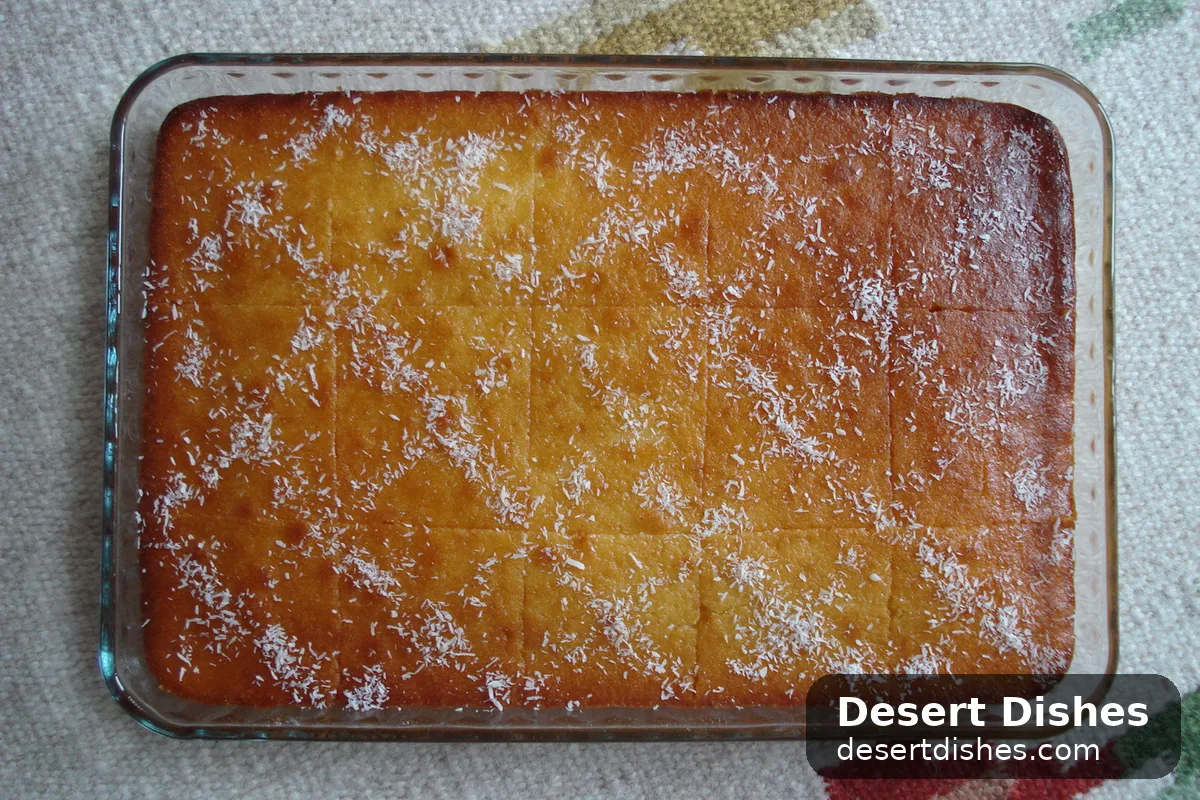
Bake at 175°C (350°F) for 30–35 minutes, until the top is deep golden and a skewer inserted in the center comes out clean. The cake should spring back lightly when pressed.
Step 6 — Pour the Syrup
As soon as the cake comes out of the oven, pour the cooled syrup slowly and evenly over the hot cake — it will hiss and sink in. Pour in two or three rounds, letting each round soak in before adding more.

Step 7 — Cool and Soak
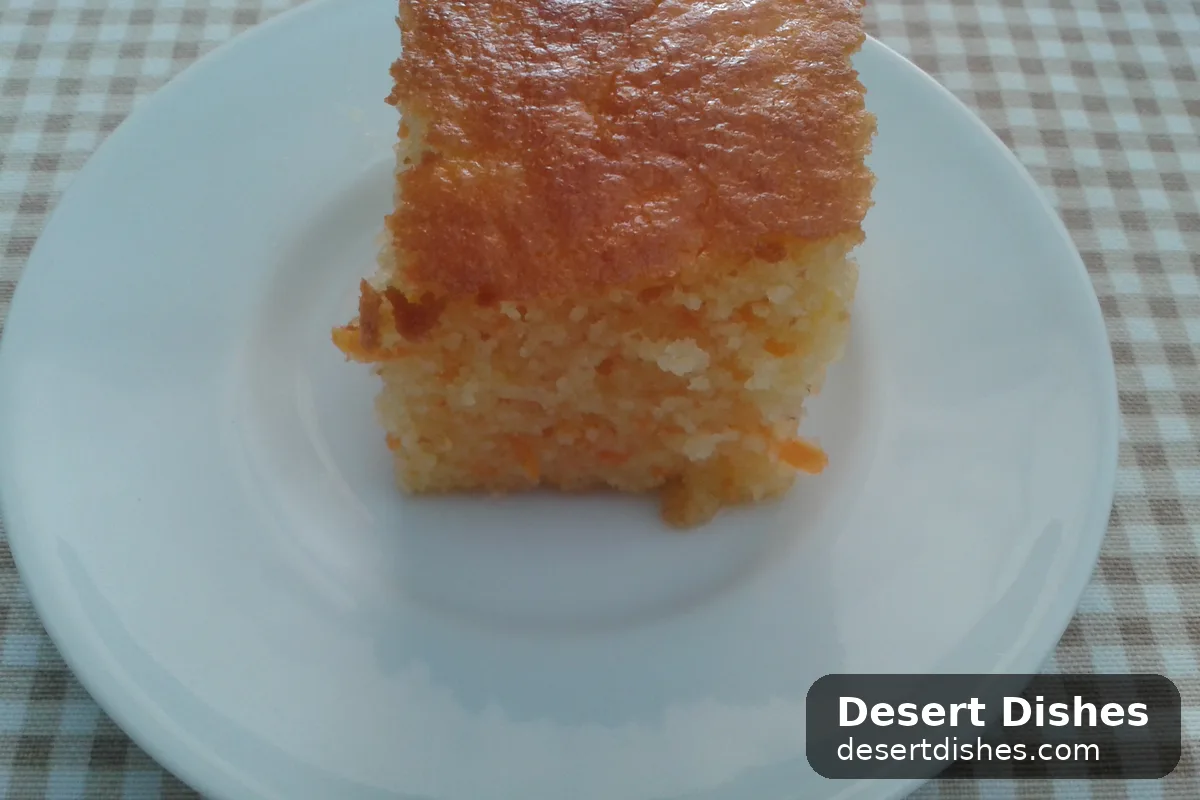
Let the cake cool in the dish for at least 30 minutes so it drinks up the syrup. The cake is at its best once fully cool — the crumb turns moist and tender, never soggy. (Pictured: carrot revani, havuçlu revani, a popular variation with grated carrot folded into the batter.)
Step 8 — Slice and Serve
Slice into 12 squares and lift out with a spatula. Top each square with shredded coconut or crushed pistachios and serve at room temperature, with coffee or tea.

Tips for Perfect Revani
- Cool syrup, hot cake. Make the syrup first and let it cool while the cake bakes. Hot syrup on a hot cake makes the cake fall apart; cold syrup on a cold cake does not soak in.
- Pour in rounds. Two or three slow rounds, letting each soak in, beats one fast pour that pools on top.
- Do not overmix. Stir just until no dry streaks remain. Overmixed batter bakes up tough instead of tender.
- Use fine semolina. Fine semolina gives the classic tender crumb. Coarse semolina makes a gritty, heavy cake.
- Let it cool fully. Thirty minutes is the minimum. A warm revani is still drinking up its syrup, and slices cut too soon fall apart.
- Zest before juicing. Zest the lemon first, then juice it — the other way round is fiddly, and you need both.
Storage, Make-Ahead and Freezing
- Room temperature: cover the dish and keep for about 2 days — the cake stays moist, especially once the syrup has settled.
- Refrigerator: keeps up to 5 days in an airtight container. Let slices come to room temperature before serving, or warm them briefly.
- Freezing: wrap squares individually and freeze for up to 3 months. Thaw overnight in the fridge.
- Make ahead: revani is at its best the next day, once the syrup has fully settled into the crumb — bake it the day before serving.
Variations
- Carrot revani (havuçlu revani). Fold 150 g (about 1 1/2 cups) of finely grated carrot and 1/2 teaspoon of cinnamon into the batter — pictured in Figure 4.
- Corn revani. Replace half the semolina with fine cornmeal and top with sesame seeds — pictured in Figure 5.
- Orange revani. Replace the lemon zest and juice with orange, and add 1 teaspoon of orange blossom water to the syrup.
- Pistachio topping. Top with crushed pistachios instead of coconut for a greener, nuttier finish.
- Coconut revani. Stir 50 g (about 2/3 cup) of shredded coconut into the batter for a coconut crumb.
Nutrition
One slice (1 of 12) has about 320 calories, 48 g carbohydrates, 5 g protein, 12 g fat, 5 g saturated fat, 30 g sugar, 1 g fiber and 180 mg sodium. Nutrition information is an estimate only.
Dietary notes: Contains wheat (gluten), egg, and milk. Nut-free if the pistachio topping is left out (coconut topping only).
| Calories | 320 |
|---|---|
| Carbohydrates | 48 g |
| Protein | 5 g |
| Fat | 12 g |
| Saturated fat | 5 g |
| Sugar | 30 g |
| Fiber | 1 g |
| Sodium | 180 mg |
Shop This Recipe
As an Amazon Associate, Desert Dishes earns from qualifying purchases.
Ingredients
250 g (1 1/2 cups)
1 teaspoon
30 g, for topping
30 g, for topping
Baking Equipment
for this recipe
for this recipe
for this recipe
for the syrup
for lining the dish
How we write our recipes: Every Desert Dishes recipe is written with US home cooks in mind — ingredients are given in cups and grams, temperatures in Fahrenheit and Celsius, and times are stated as ranges where ovens vary. Our Recipe Testing Policy explains how recipes are checked and corrected. Found an error? Contact us and we will fix it — see our Corrections Policy.
FAQ
What is revani cake?
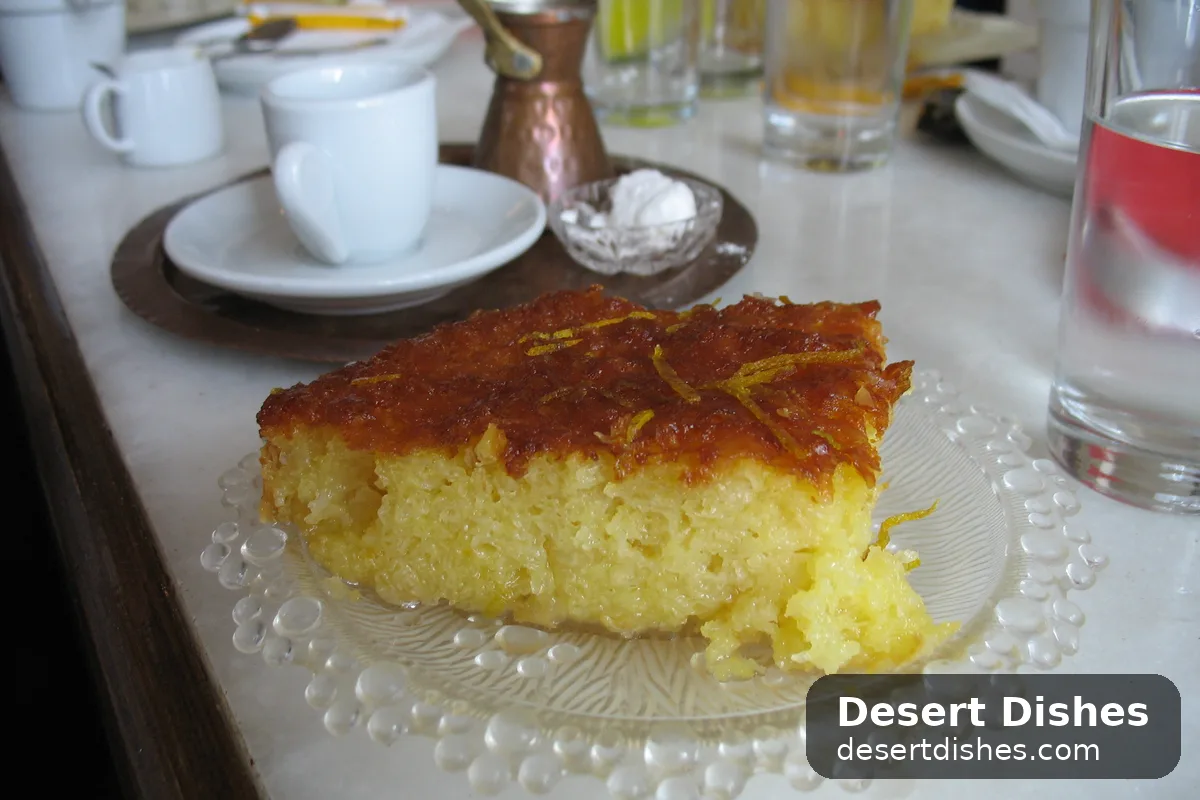
Revani is a semolina cake from Turkish and Greek kitchens: a soft sponge made with semolina, flour, eggs and yogurt, baked golden and then soaked in lemon syrup. The syrup is what makes it — the cake drinks it up and turns moist and tender, with a fine, slightly grainy crumb from the semolina.
Is revani the same as basbousa?
No, although both are semolina cakes soaked in syrup. Revani is lighter and sponge-like — it has eggs, flour and yogurt, and is usually flavored with lemon and topped with coconut or pistachios. Basbousa is denser, made mostly with semolina and coconut, and is often topped with almonds. They look alike in the dish, but the crumb and flavor are different.
Should the syrup be hot or cold for revani?
The syrup should be cool and the cake hot — that is the classic rule. Make the syrup first and let it cool while the cake bakes, then pour it slowly over the cake the moment it comes out of the oven. Hot syrup on a hot cake makes the cake fall apart; cold syrup on a cold cake does not soak in.
How long does revani keep?
Covered at room temperature, revani keeps for about 2 days. In the fridge it keeps for up to 5 days — let slices come to room temperature before serving, or warm them briefly. It also freezes well: wrap squares individually and freeze for up to 3 months, then thaw overnight in the fridge.
Times, servings and nutrition values are standard guidance and may vary.
Revani Recipe
Ingredients
Equipment
Method
- Make the syrup first. Combine the sugar, water, lemon juice and lemon peel (if using) in a medium saucepan. Bring to a boil over medium heat, stirring until the sugar dissolves, then simmer for 5 minutes. Remove from the heat and set aside to cool — the syrup should be cool when it meets the hot cake.
- Heat the oven to 175°C (350°F). Grease a 9x13-inch (23x33 cm) baking dish, or line it with parchment paper, leaving an overhang on the long sides for lifting the cake out later.
- Whisk the semolina, flour, sugar, baking powder and salt together in a large bowl until evenly mixed. Stir in the lemon zest.
- Make the batter. In a second bowl, whisk the eggs, yogurt, oil and vanilla together until smooth and pale, about 1 minute. Pour the wet mixture into the dry ingredients and stir just until no dry streaks remain — do not overmix, or the cake turns tough. Scrape the batter into the prepared dish and smooth the top.
- Bake at 175°C (350°F) for 30–35 minutes, until the top is deep golden and a skewer inserted in the center comes out clean. The cake should spring back lightly when pressed.
- Pour the syrup. As soon as the cake comes out of the oven, pour the cooled syrup slowly and evenly over the hot cake — it will hiss and sink in. Pour in two or three rounds, letting each round soak in before adding more.

- Cool and soak. Let the cake cool in the dish for at least 30 minutes so it drinks up the syrup. The cake is at its best once fully cool — the crumb turns moist and tender, never soggy. (Pictured: carrot revani, havuçlu revani, a popular variation with grated carrot folded into the batter.)

- Slice into 12 squares and lift out with a spatula. Top each square with shredded coconut or crushed pistachios and serve at room temperature, with coffee or tea.

Notes
More Recipes to Try
More from Desert Dishes — try these next:
- Basbousa Recipe with Coconut — Soft Middle Eastern Semolina Cake — the other semolina syrup cake — denser, coconut-rich, and just as easy.
- Saffron Milk Cake Recipe — a soft sponge soaked in saffron milk, topped with whipped cream and pistachios.
- Yellow Cake Recipe (Moist & Buttery) — moist, buttery golden layer cake with a tender crumb; pairs with any frosting.
- Baklava Recipe with Pistachios — crisp phyllo layers, spiced nuts and honey syrup.
- Muhallabia Recipe — silky Arabic milk pudding with rosewater, set in ramekins and topped with pistachios.
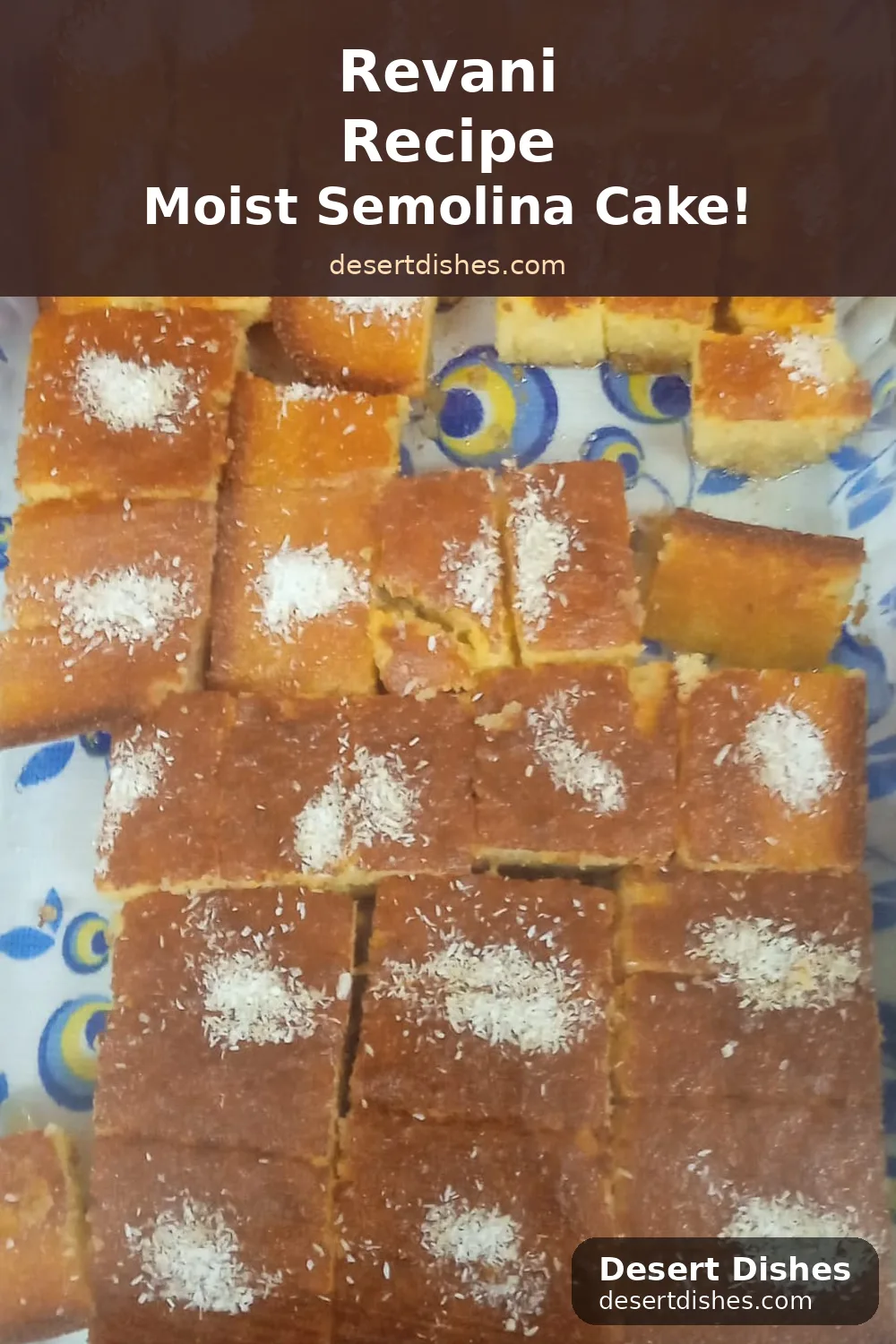
Photo credits: Greek revani by Akerbeltz (CC BY-SA 3.0); revani in a glass dish by Maderibeyza (CC BY-SA 3.0); revani slice by E4024 (CC BY-SA 4.0); carrot revani by E4024 (CC BY-SA 4.0); revani pin by Samizambak (CC BY-SA 4.0) — all via Wikimedia Commons. Corn revani photo is public domain / CC0.