
Middle Eastern Desserts
Last updated: November 12, 2026.
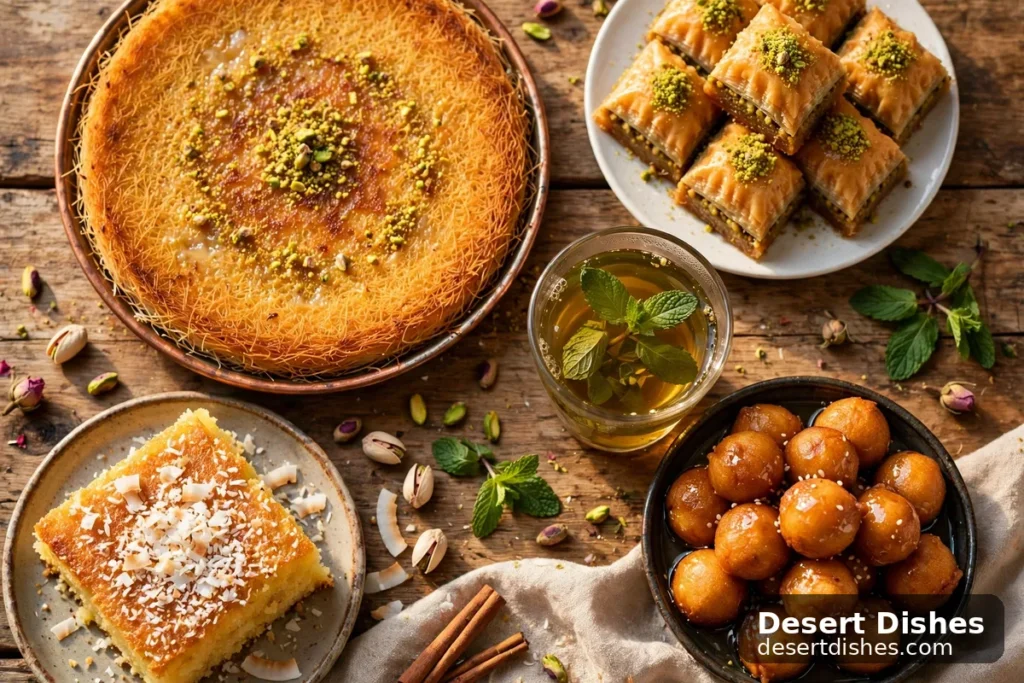
Arabian desserts are the sweet dishes of the Middle East — syrup-soaked pastries, semolina cakes, fried dumplings, and creamy puddings flavored with rosewater, orange blossom, saffron, pistachios, and dates. For a US reader trying them at home, they are some of the most rewarding desserts to make: the ingredients are available in most American grocery stores and Middle Eastern markets, the methods are straightforward, and the results taste like nothing else in the dessert world. This hub is the flagship page of Desert Dishes and the home of our first recipes — start with kunafa, then work through luqaimat, basbousa, umm ali, qatayef, and baklava.
Middle Eastern Desserts at a Glance
Arabian desserts share a flavor language that is easy to recognize once you have tasted it. Sweet syrup — usually sugar, water, and lemon, sometimes scented with rosewater or orange blossom water — soaks into pastry, cake, or dumplings and gives them their signature moist, fragrant sweetness. Nuts, especially pistachios, walnuts, and almonds, add crunch and richness. Semolina, phyllo, and kataifi (shredded phyllo) are the main doughs, and dairy appears as cheese in kunafa, as cream in milk puddings, and as milk in bread puddings like umm ali. These desserts are made for sharing: they are usually prepared in a large tray, cut into small pieces, and passed around at family gatherings, Ramadan evenings, and Eid celebrations. They also keep well — a tray of baklava or basbousa tastes as good on the third day as on the first. The syrup is usually poured over the dessert while it is still warm, so it soaks in rather than pooling on top, and a finished tray is cut into small pieces before serving. For a home cook in the US, the most important thing to know is that these desserts are approachable: the recipes use a small set of pantry staples, the techniques are simple once you have done them once, and the results are forgiving. They are also usually served in small pieces with coffee or tea, which suits the way they are made — a tray cut into diamonds or squares, passed around the table, with everyone taking a piece or two. That sharing style is part of the tradition, and it is why these desserts suit gatherings so well: one tray, many guests, and no plating to worry about.


Classic Arabian Sweets to Try First
These are the six classic Arabian sweets to start with. All six are planned recipes on this site, and each one teaches a different part of the Arabian dessert tradition.
- Kunafa — crispy shredded kataifi pastry with a gooey cheese center, soaked in sweet syrup. The first recipe on this site, and the best place to start.
- Luqaimat — crisp golden dumplings, fried and drizzled with date syrup. Bite-sized, shareable, and a favorite at Ramadan and Eid.
- Basbousa — a soft semolina cake with coconut, soaked in syrup. One bowl, one tray, and bakery-style results at home.
- Umm Ali — a creamy Egyptian bread pudding made with puff pastry, nuts, and hot milk. Comforting, warm, and ready in about 30 minutes.
- Qatayef — small stuffed pancakes filled with spiced walnuts and soaked in syrup. The classic Ramadan sweet.
- Baklava — layers of thin phyllo pastry with nuts and syrup, cut into small diamond pieces. The most widely known Arabian dessert in the US.
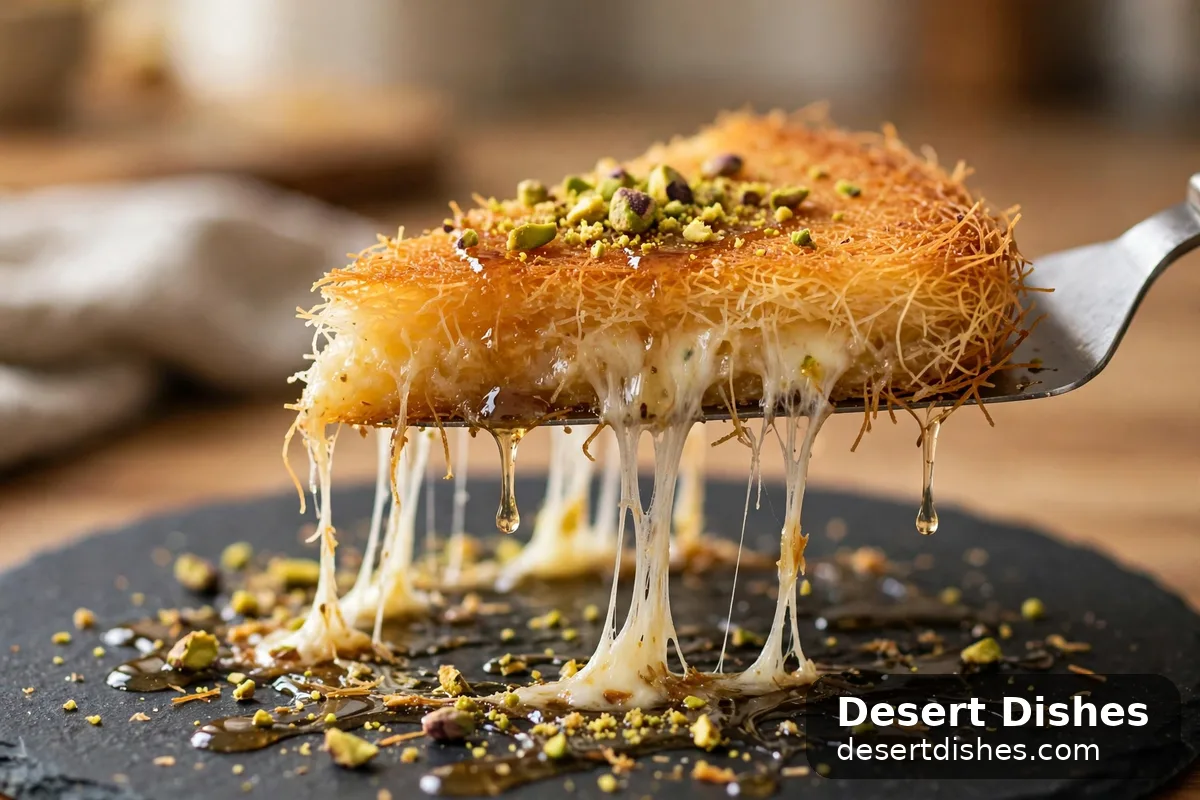


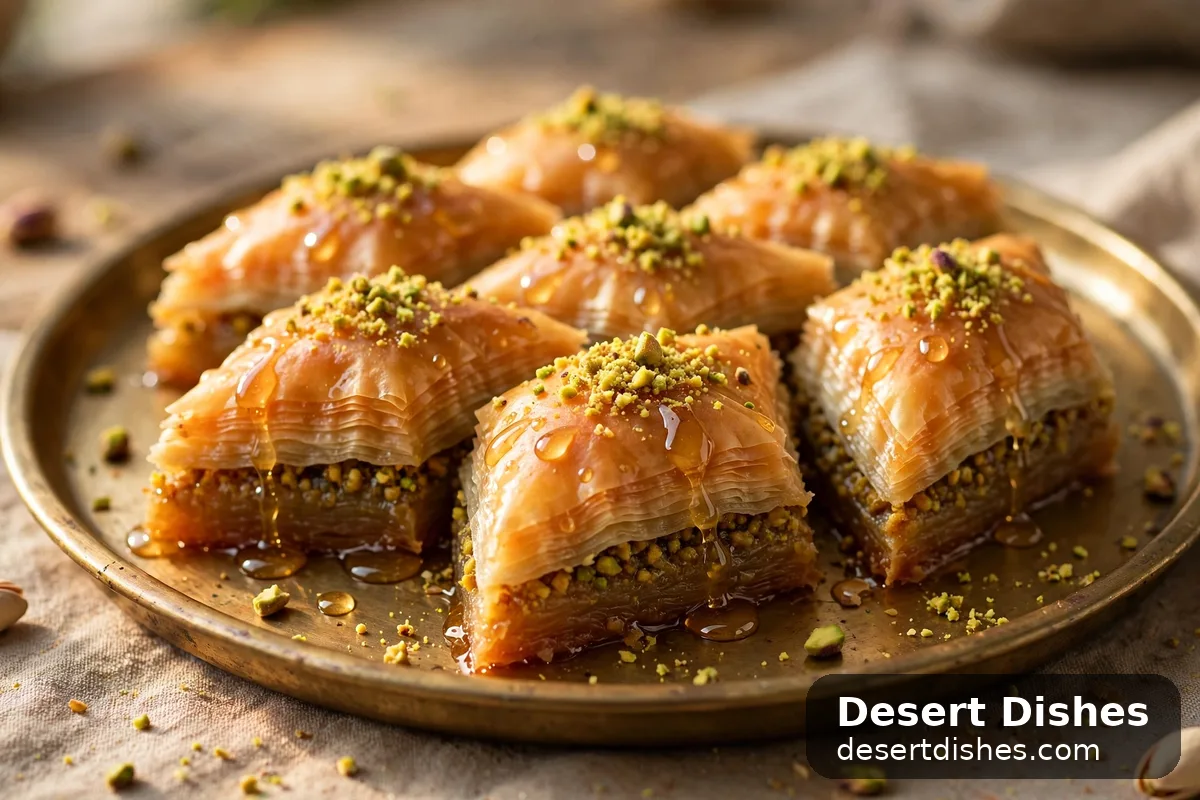
Kunafa is the best first recipe because it teaches the core skills — working with kataifi, layering cheese, and using syrup — in a single dish, and because it is the most recognizable Arabian dessert for a US audience. Luqaimat is the best second recipe: it is fun to make, it fries quickly, and it is impossible to eat just one. Basbousa is the easiest of the six, a one-bowl cake that suits a first attempt. Umm ali is the fastest, ready in about half an hour from pantry ingredients. Qatayef is the most seasonal, tied to Ramadan, and baklava is the most impressive on a table — thin layers, crisp pastry, and a jewel-like finish of pistachios. Together, the six cover the whole tradition: fried, baked, soaked, and creamy, with cheese, nuts, semolina, and pastry all represented.
Choosing an Arabian Dessert by Occasion
Different occasions call for different Arabian desserts. The table below matches each sweet to the moment it suits best, so you can pick from the occasion rather than from a list.
| Occasion | Best choice | Why it fits |
|---|---|---|
| First time trying Arabian desserts | Kunafa | The most recognizable; teaches the core skills in one dish |
| Ramadan evening | Qatayef | The classic Ramadan sweet, made fresh through the month |
| Eid gathering | Luqaimat or baklava | Bite-sized and shareable; feeds a crowd from one tray |
| Large family dinner | Basbousa | One tray serves many; keeps well for days |
| Cold evening, comfort food | Umm ali | Warm, creamy, and ready in about 30 minutes |
| Bringing dessert to a party | Baklava or basbousa | Travels well; keeps for days; cut into small pieces |
| Impressing guests | Baklava | The most visually striking; layers and pistachios shine |
| Quick weeknight dessert | Umm ali | Pantry ingredients, one dish, about 30 minutes |
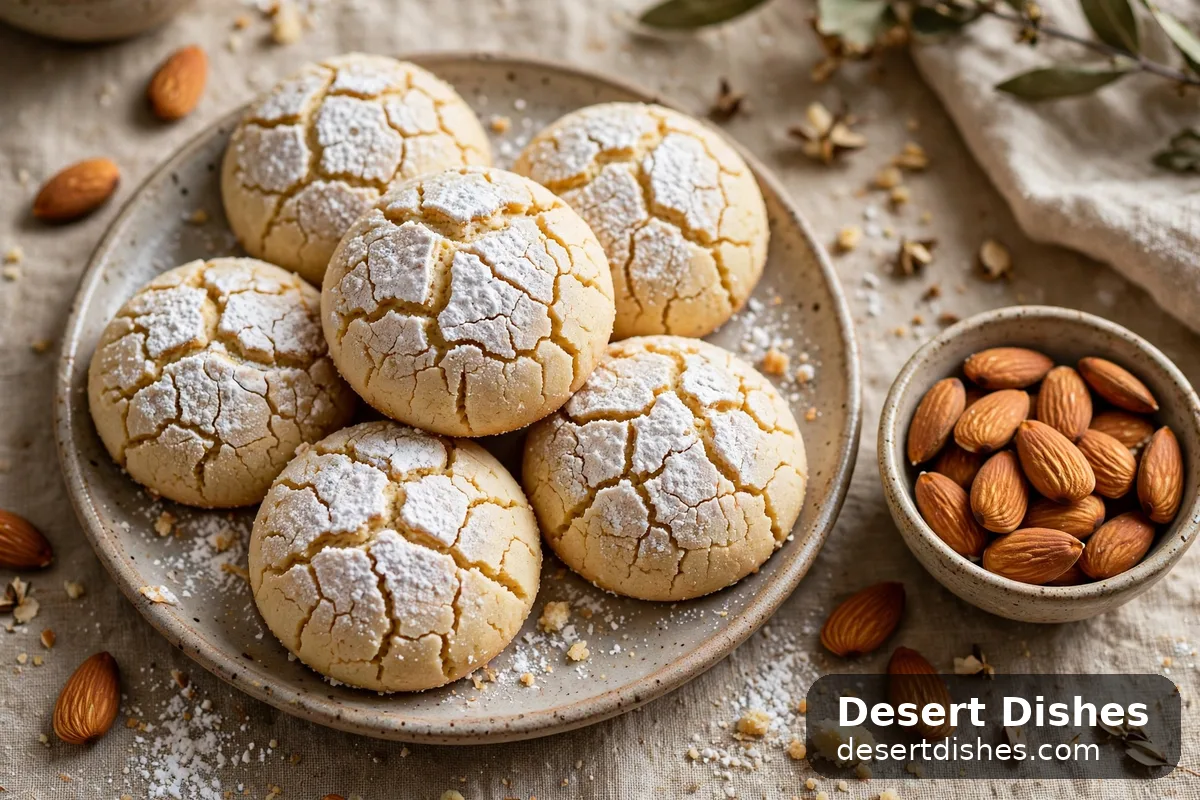
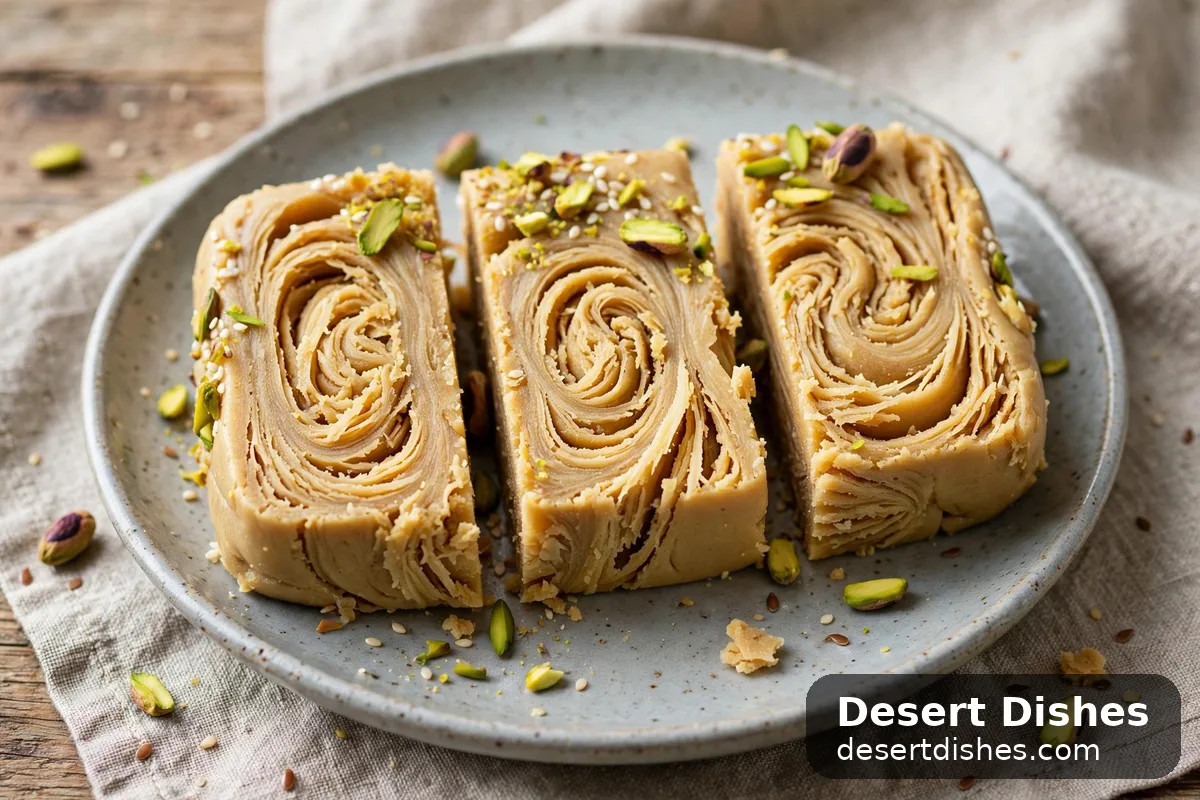
For a first attempt, choose kunafa or basbousa — both are forgiving and both use ingredients that are easy to find. For a celebration, choose luqaimat or baklava, because both are made to be shared and both look generous on a table. For Ramadan, qatayef is the traditional choice, and for a cold evening, umm ali is the comforting one. The occasion matters because these desserts are social by nature: they are made in trays, cut into pieces, and passed around, so the right choice is the one that fits the number of people and the mood of the gathering. When in doubt, pick the dessert you are most excited to make — enthusiasm covers a multitude of first-time mistakes, and a syrup-soaked dessert is very forgiving.
Arabian Dessert Ingredients and Pantry Staples
Arabian desserts use a small, repeatable set of ingredients. Stock these once, and most recipes on this hub become possible without a special shopping trip.
- Kataifi (shredded phyllo dough) — the crisp pastry in kunafa. Found in the freezer section of Middle Eastern markets and many large US grocery stores.
- Phyllo sheets — thin pastry for baklava. Available frozen in most US supermarkets.
- Semolina — the grain in basbousa. Available in the baking aisle or at Middle Eastern and Indian grocery stores.
- Pistachios, walnuts, and almonds — the nuts of Arabian desserts. Buy them unsalted; pistachios are the classic garnish.
- Rosewater and orange blossom water — the floral flavorings in syrups. A little goes a long way; found in the international aisle or at Middle Eastern markets.
- Saffron threads — used in milk cakes and some puddings. Expensive by weight, but a pinch flavors a whole dish.
- Date syrup and dates — the traditional sweetener for luqaimat and energy balls. Available at Middle Eastern markets and in the international aisle.
- Sugar, lemon, and butter — the base of every syrup and most pastries; already in most US kitchens.
- Cheese for kunafa — a mild, meltable white cheese. Mozzarella is the common US substitute and works well.
Most of these ingredients are available in the US without ordering online: large supermarkets carry phyllo, semolina, pistachios, and rosewater in the international aisle, and any city with a Middle Eastern grocery store will have kataifi, date syrup, and saffron. If you can only stock five things, start with kataifi, phyllo, semolina, pistachios, and rosewater — those five cover kunafa, baklava, basbousa, and the syrups for everything else. Buy nuts unsalted and store them in the freezer so they stay fresh, and keep rosewater and orange blossom water in a cool cupboard, where they last for months.

Recipes in This Hub
These recipes are the core Arabian sweets on Desert Dishes — all six are live now.
- Easy Kunafa Recipe with Cheese — crispy shredded pastry, a gooey cheese center, and sweet syrup.
- Luqaimat Recipe — Crispy Arabic Sweet Dumplings — crispy golden dumplings drizzled with date syrup.
- Basbousa Recipe with Coconut — soft, syrup-soaked Middle Eastern semolina cake.
- Umm Ali Recipe — Creamy Egyptian Bread Pudding — creamy Egyptian bread pudding with puff pastry, nuts, and hot milk.
- Qatayef Recipe with Walnuts — stuffed Ramadan pancakes with spiced walnuts and syrup.
- Baklava Recipe with Pistachios — crisp phyllo layers, spiced nuts and honey syrup.
Baklava is live now — find it in the list above.
More from Desert Dishes: Holiday Dessert Recipes · Dessert Types and Categories · Fruit Desserts · Healthy and Light Desserts · Homepage



FAQ
What is the most popular Arabian dessert?
Kunafa is the most widely known Arabian dessert, and the best-known starting point for a US reader — crispy shredded pastry with a gooey cheese center, soaked in syrup. Baklava is the other dessert most Americans already know by name. Both are popular because they are distinctive: nothing in the standard American dessert repertoire tastes quite like them, and both are made for sharing, which suits family gatherings and celebrations.
What is kunafa made of?
Kunafa is made of kataifi — finely shredded phyllo pastry — layered with a mild, meltable white cheese, baked until crisp and golden, and soaked in a sweet syrup, often scented with rosewater or orange blossom water. The cheese melts into a gooey center while the pastry stays crisp on top. In the US, mozzarella is the common substitute for the traditional cheese, and it works well.
Are Arabian desserts very sweet?
They are sweet, but the sweetness is balanced by other flavors: the floral notes of rosewater and orange blossom, the tartness of lemon in the syrup, the richness of nuts, and the salt in the cheese of a kunafa. The syrup is the sweetest part, and you control how much you pour — a light hand with the syrup gives a dessert that is fragrant and balanced rather than overwhelming. Serving small pieces also helps, since these desserts are meant to be eaten in modest portions.
Where can I buy kataifi pastry in the US?
Kataifi, also sold as shredded phyllo dough, is found in the freezer section of Middle Eastern grocery stores and in many large US supermarkets, usually near the frozen phyllo sheets. If your local store does not carry it, Middle Eastern and Mediterranean markets in most US cities stock it, and it is also available from online grocers. Buy it frozen, thaw it in the fridge overnight, and keep it covered with a damp towel while you work so it does not dry out.
What Arabian dessert should I try first?
Start with kunafa. It is the most recognizable Arabian dessert, it teaches the core skills — working with kataifi, layering cheese, and using syrup — in a single dish, and the result is impressive enough to serve to guests. If you want something simpler for a first attempt, basbousa is the easiest of the classics: a one-bowl semolina cake that is hard to get wrong. Either one is a good introduction to the flavors of Arabian desserts.

Final Thoughts
Arabian desserts are the reason this site exists, and they are the most rewarding desserts a US home cook can learn. The ingredients are available, the methods are straightforward, and the flavors — syrup, rosewater, pistachios, saffron — are unlike anything else in the dessert world. Start with kunafa, keep a tray of baklava or basbousa in the kitchen for guests, and make qatayef when Ramadan comes around. If you make only one, make kunafa — and if you make two, add luqaimat for the table. These are desserts made for sharing, and they are best enjoyed that way — cut into small pieces, passed around the table after a family meal, and eaten slowly with good company.
Sources: Tasting Table — Everything You Need to Know About Knafeh; Wikipedia — Kunafa.