Last updated: November 14, 2026.
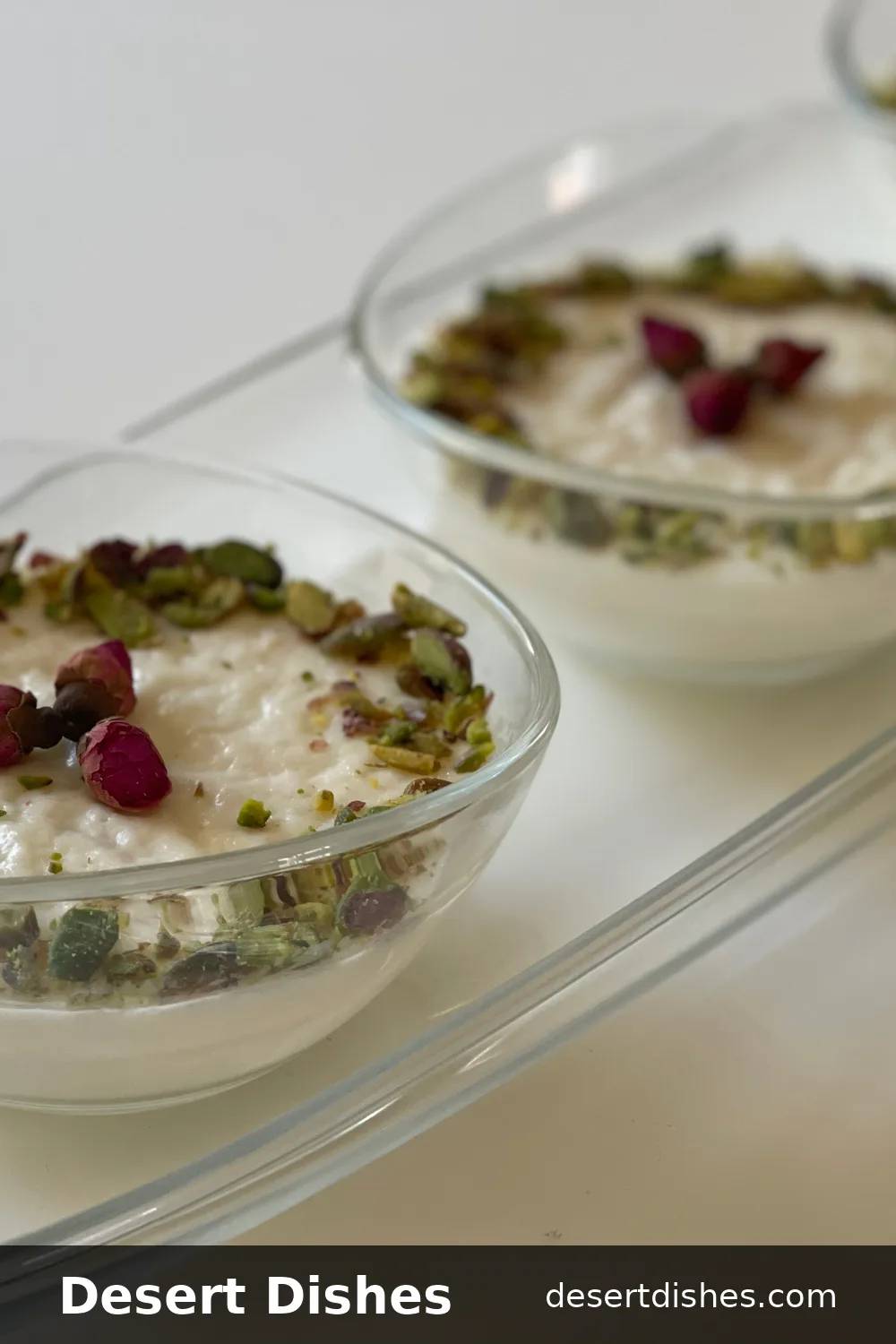
Muhallabia is the silky Arabic milk pudding you will find on every dessert table from Beirut to Cairo: milk and cream thickened gently with cornstarch, scented with rosewater and orange blossom water, set in small cups and topped with crushed pistachios. According to legend, a Persian cook introduced the pudding to al-Muhallab ibn Abi Sufra in the late 7th century — read more about muhallabia’s history on Wikipedia. This easy muhallabia recipe takes fifteen minutes of cooking and no baking at all — you stir, you pour, you chill, and the fridge does the rest.
If you have never made muhallabia, the whole recipe is five ingredients and one pot. The cornstarch does the thickening, the rosewater does the flavor, and the two-hour chill does the setting. The result is light, cool and delicately floral — the dessert you serve after a heavy meal, when everyone wants something sweet but not rich. It is also one of the best make-ahead desserts: it keeps in the fridge for three days and only gets silkier.
Muhallabia belongs in our Middle Eastern desserts collection, and it is the lightest of the Arabian puddings — the cool cousin of umm ali, which is baked and rich. If you are still choosing what to make, our dessert recipes hub has the full list of ideas.
Why You’ll Love This Muhallabia
- No baking. Fifteen minutes of stirring on the stove, then the fridge sets it — the oven never turns on.
- Five ingredients. Milk, cream, sugar, cornstarch and rosewater. That is the whole recipe.
- Light and refreshing. Cool, silky and delicately floral — the dessert you want after a heavy meal, or on a hot day.
- Make it ahead. It keeps in the fridge for up to 3 days and gets silkier overnight, so it is perfect for Eid and Ramadan iftar.
- Feeds a crowd. One batch fills 6 ramekins, and the recipe doubles cleanly for a party.
Ingredients
Milk Pudding
- 500 ml (2 cups) whole milk
- 120 ml (1/2 cup) heavy cream
- 60 g (1/4 cup) granulated sugar
- 40 g (about 1/4 cup) cornstarch
- 2 tablespoons rosewater — where to buy
- 1 teaspoon orange blossom water, optional, for a floral note — where to buy
- 1/2 teaspoon vanilla extract — where to buy
To Serve
- 30 g (about 1/4 cup) crushed pistachios — where to buy
- Dried rose petals, optional, for garnish
- Honey, optional, for drizzling
Equipment
- Medium saucepan — where to buy
- Whisk — where to buy
- Mixing bowl — where to buy
- 6 ramekins or small cups — where to buy
- Fine-mesh strainer
- Measuring cups and spoons
How to Make Muhallabia
Step 1 — Mix the Cornstarch Slurry
In a small bowl, whisk the cornstarch with 60 ml (1/4 cup) of the milk until completely smooth — no lumps. This slurry is what thickens the pudding; if it is lumpy, the pudding will be too. Set it aside.
Step 2 — Heat the Milk
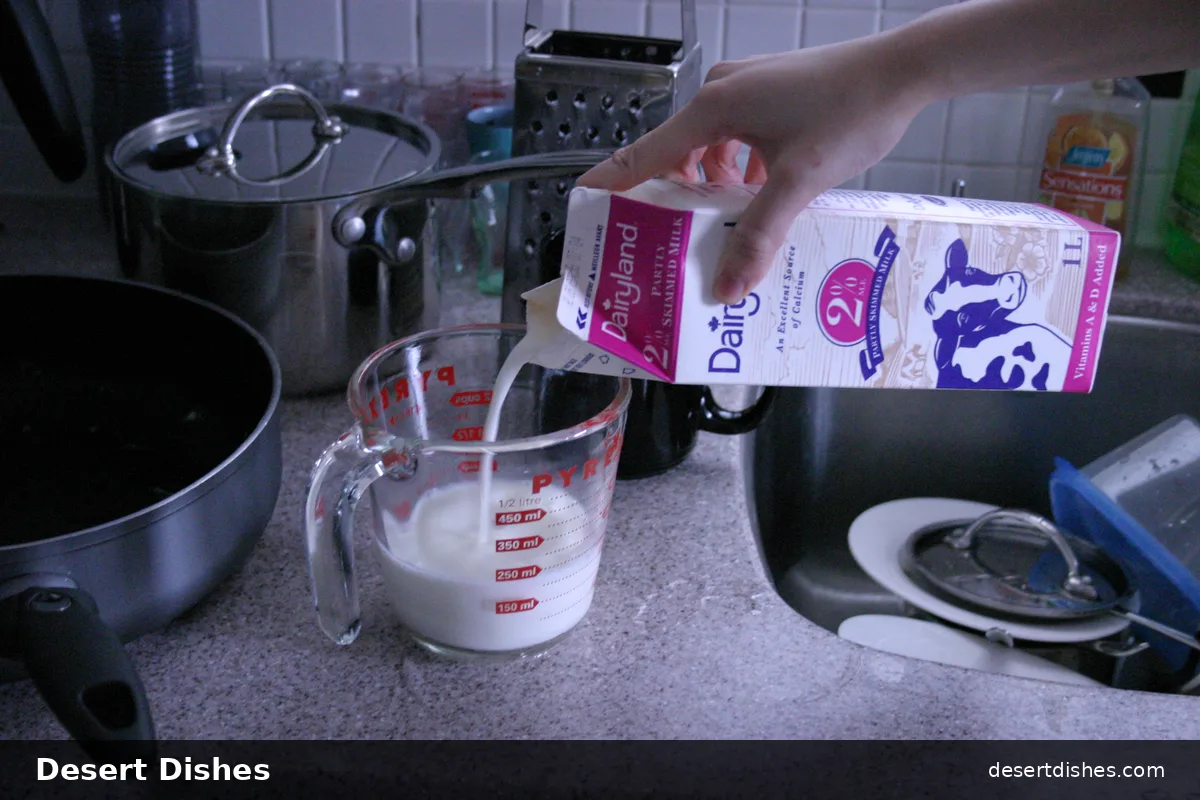
Pour the remaining milk, the cream and the sugar into a medium saucepan. Warm over medium heat, stirring occasionally, until the sugar dissolves and the milk is steaming — about 5 minutes. Do not let it boil hard.
Step 3 — Whisk in the Slurry and Thicken
Give the slurry a quick stir (cornstarch settles fast), then pour it into the saucepan in a thin stream, whisking constantly. Keep whisking over medium heat for 3–5 minutes, until the pudding thickens enough to coat the back of a spoon — it should drip slowly, like a thin custard.
Step 4 — Add the Flavorings
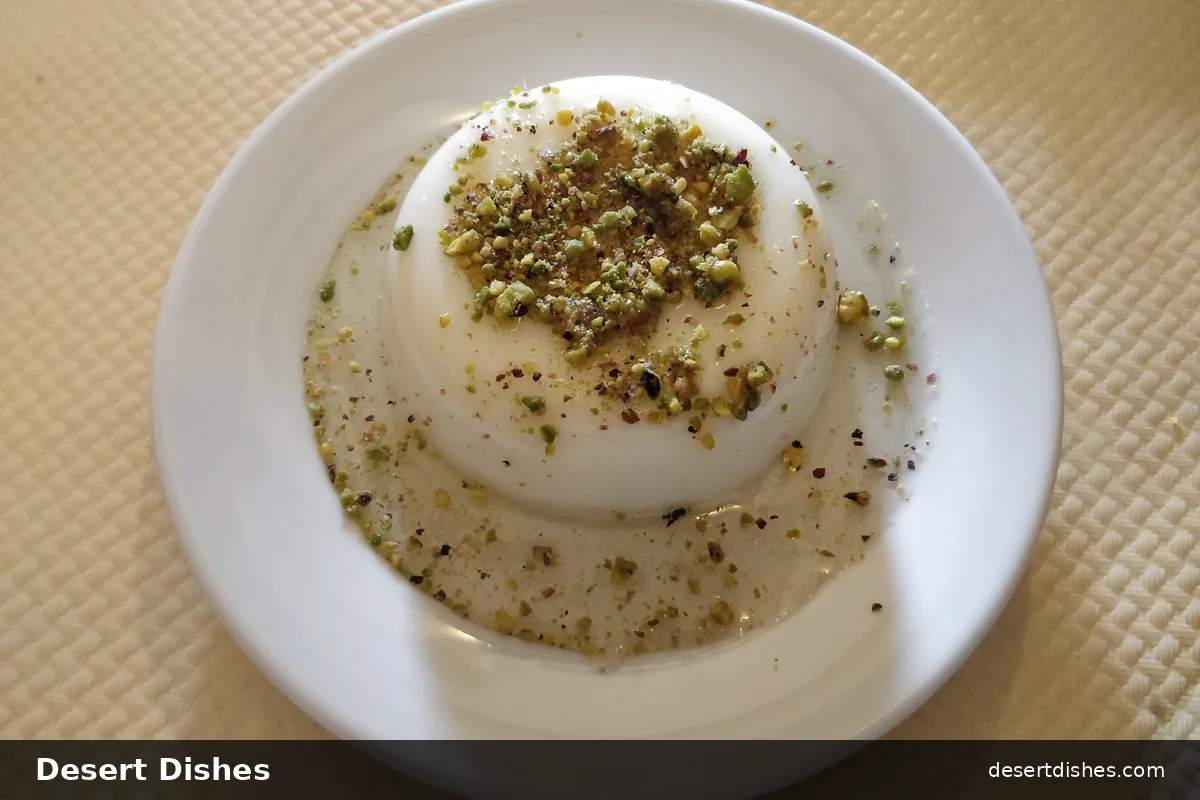
Take the saucepan off the heat. Stir in the rosewater, the orange blossom water (if using) and the vanilla. Taste and add a little more rosewater if you like a stronger floral note — the flavor fades slightly as the pudding chills.
Step 5 — Strain and Pour
For the silkiest texture, pour the pudding through a fine-mesh strainer into a jug, then divide it evenly between 6 ramekins or small cups. The strainer catches any tiny lumps and leaves the pudding perfectly smooth.
Step 6 — Chill Until Set
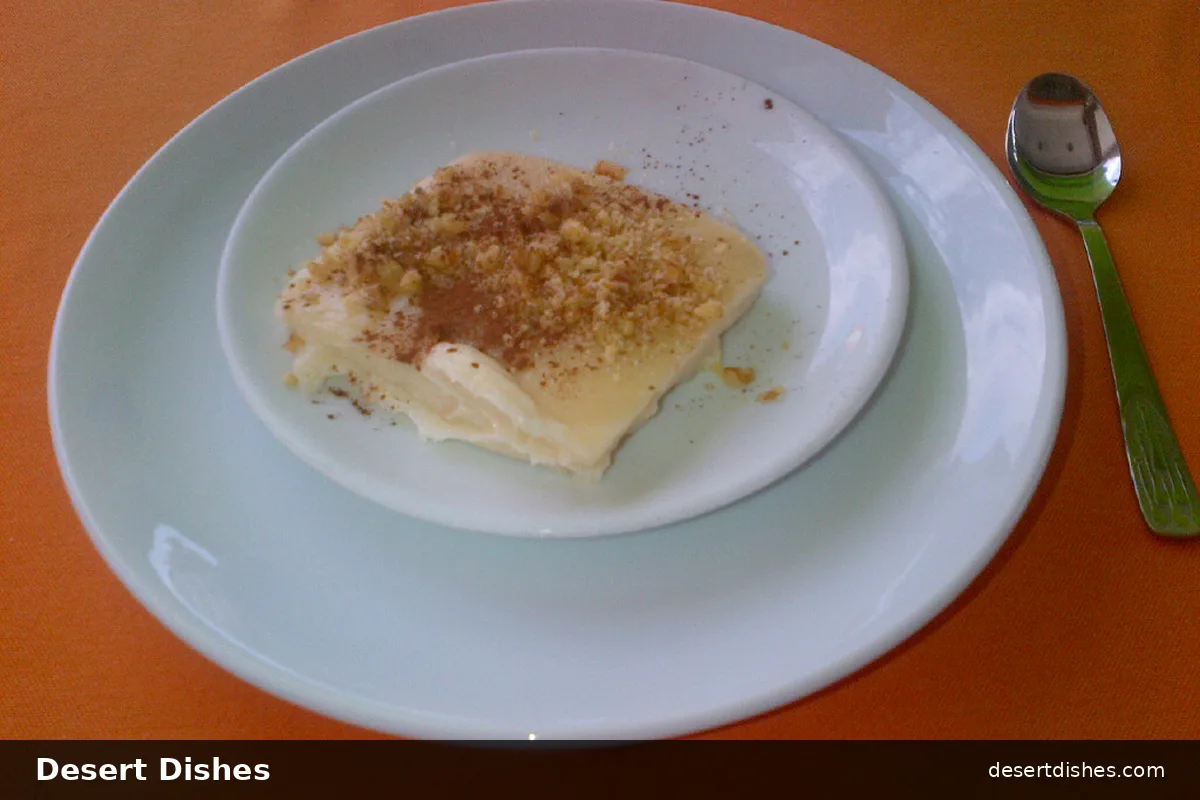
Let the ramekins cool for 20 minutes, then cover each one with plastic wrap, pressing the wrap directly onto the surface of the pudding so no skin forms. Chill in the fridge for at least 2 hours, until set. The pudding should wobble gently when you shake the ramekin.
Step 7 — Garnish and Serve
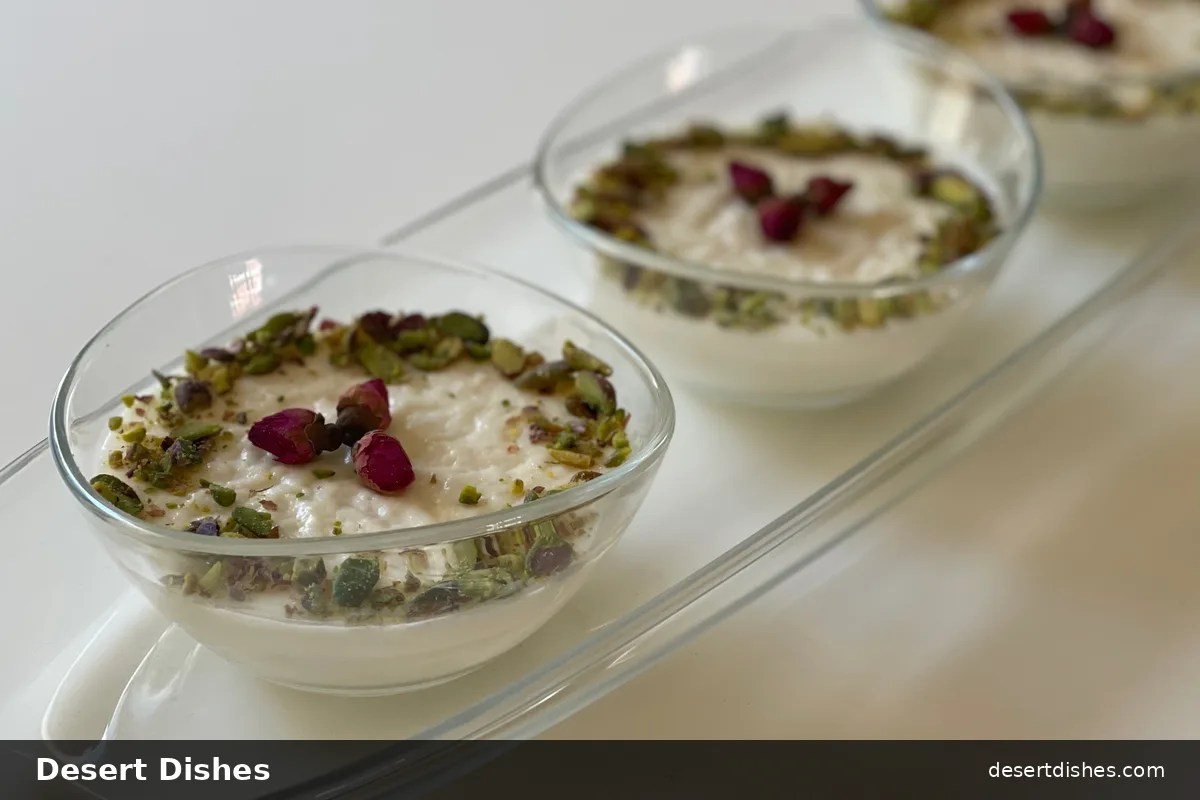
Unwrap the ramekins and top each one with a spoonful of crushed pistachios and a few dried rose petals if you like. Serve cold, straight from the fridge, with a spoon — no unmolding needed.
Step 8 — Serve
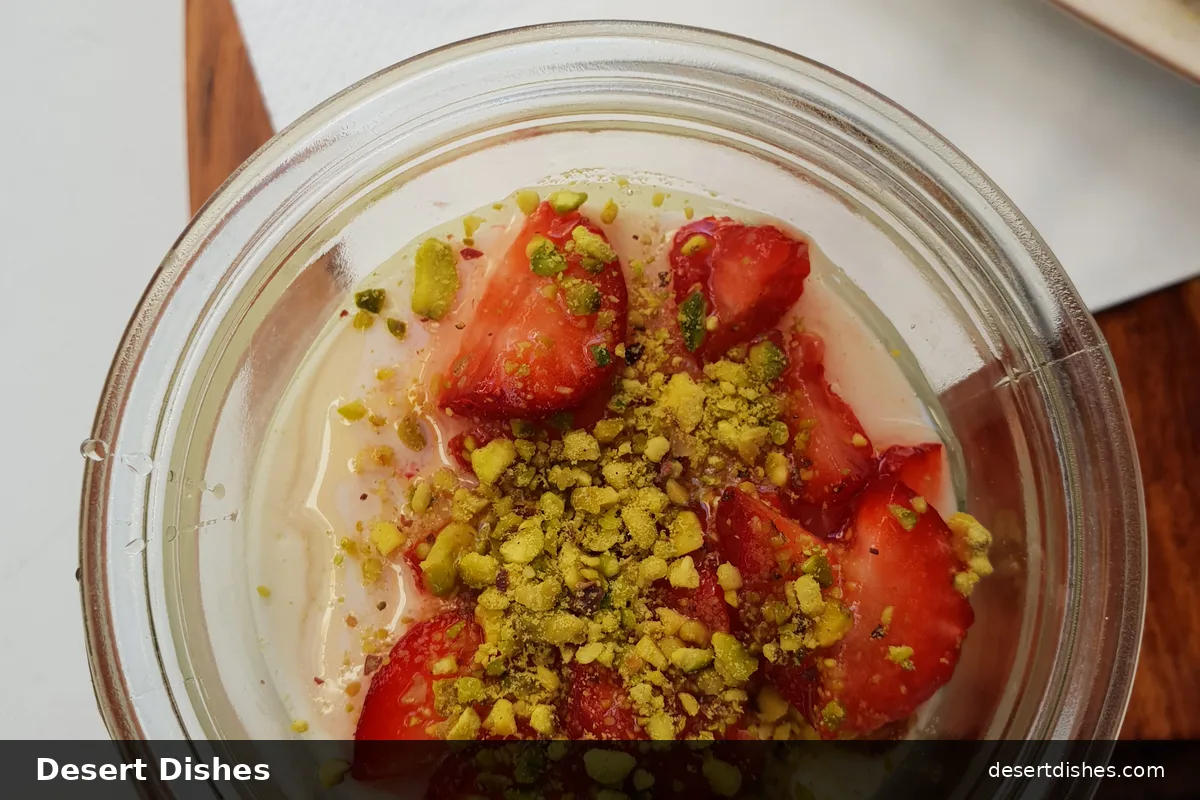
Muhallabia is best served cold, straight from the fridge, with a spoon. It keeps in the fridge for up to 3 days — add the pistachio topping just before serving so it stays crunchy.
Tips for Perfect Muhallabia
- Whisk the slurry smooth. Lumps in the cornstarch slurry stay lumpy in the pudding. Whisk it with cold milk until there is not a single lump, and stir it again right before pouring — cornstarch settles in seconds.
- Do not boil hard. A gentle simmer thickens the pudding; a hard boil makes a skin and can scorch the milk. Keep the heat at medium and keep whisking.
- Strain for silk. Pouring the pudding through a fine-mesh strainer before filling the ramekins catches any tiny lumps and is the difference between good and silky.
- Press the wrap down. Lay the plastic wrap directly on the surface of the pudding before chilling, or a skin forms on top.
- Chill the full 2 hours. The pudding sets as it cools. Two hours is the minimum; overnight is even better and the flavor deepens.
- Top at the last minute. Add the pistachios and rose petals just before serving so the nuts stay crunchy and the petals stay bright.
Storage, Make-Ahead and Freezing
- Leftovers: store covered in the fridge for up to 3 days, with plastic wrap pressed onto the surface so no skin forms. Serve cold, straight from the fridge.
- Make ahead: muhallabia is made the day before — it keeps for up to 3 days in the fridge and gets silkier overnight. Add the pistachio topping just before serving.
- Freezing: do not freeze muhallabia. Freezing breaks the cornstarch gel and the pudding turns watery when it thaws.
- Unmolding: muhallabia is served in its ramekin, not unmolded — no need to worry about release. If you do want to unmold, dip the ramekin in warm water for 10 seconds first.
Variations
- Malabi (Israeli style). Use the same recipe and serve with a rose syrup (rosewater, sugar and water) and crushed pistachios on top — the classic malabi.
- Chocolate muhallabia. Whisk 2 tablespoons of cocoa powder into the cornstarch slurry for a chocolate version, and top with shaved chocolate.
- Orange blossom muhallabia. Swap the rosewater for orange blossom water and top with orange zest and pistachios.
- Coconut muhallabia. Replace the heavy cream with coconut cream and top with toasted coconut flakes.
- Mango muhallabia. Pour a layer of mango puree over the set pudding and chill for 30 minutes more — a tropical twist.
Nutrition
One ramekin (1 of 6) has about 200 calories, 31 g carbohydrates, 5 g protein, 6 g fat, 3 g saturated fat, 23 g sugar, 1 g fiber and 60 mg sodium. Nutrition information is an estimate only.
Dietary notes: Contains milk and cream. Naturally gluten-free and egg-free. The pistachio topping contains tree nuts — leave it off for a nut-free version. Not suitable for dairy allergies as written; plant milk and coconut cream can be used (see the FAQ).
| Calories | 200 |
|---|---|
| Carbohydrates | 31 g |
| Protein | 5 g |
| Fat | 6 g |
| Saturated fat | 3 g |
| Sugar | 23 g |
| Fiber | 1 g |
| Sodium | 60 mg |
How we write our recipes: Every Desert Dishes recipe is written with US home cooks in mind — ingredients are given in cups and grams, temperatures in Fahrenheit and Celsius, and times are stated as ranges where ovens vary. Our Recipe Testing Policy explains how recipes are checked and corrected. Found an error? Contact us and we will fix it — see our Corrections Policy.
Shop This Recipe
As an Amazon Associate, Desert Dishes earns from qualifying purchases.
Ingredients
2 tablespoons
1 teaspoon, optional, for a floral note
1/2 teaspoon
30 g (about 1/4 cup)
Baking Equipment
for this recipe
for this recipe
for this recipe
6
FAQ
Why is my muhallabia lumpy?
Lumps come from the cornstarch slurry. If the slurry is not whisked smooth before it goes into the pan, the lumps stay. Whisk the cornstarch with cold milk until there is not a single lump, and give it a quick stir right before pouring it in — cornstarch settles in seconds. If the pudding is already lumpy, strain it through a fine-mesh strainer before pouring it into the ramekins and the texture will be silky.
Can I use almond milk or oat milk instead of whole milk?
Yes, but the texture changes. Whole milk gives the classic rich, creamy set; almond milk makes a lighter, more delicate pudding that sets a little softer. Use the same amounts, and add an extra teaspoon of cornstarch if you want a firmer set with plant milk. Keep the cream for richness, or swap it for coconut cream — the coconut flavor works well with rosewater.
How long does muhallabia need to set?
At least 2 hours in the fridge. The pudding sets as it cools — after 2 hours it should wobble gently when you shake the ramekin but hold its shape. Overnight is even better: the flavor deepens and the texture becomes silkier. Do not freeze it — freezing breaks the cornstarch gel and the pudding turns watery when it thaws.
Can I make muhallabia ahead of time?
Yes — muhallabia is one of the best make-ahead desserts. It keeps in the fridge for up to 3 days, covered with plastic wrap pressed onto the surface so no skin forms. Add the pistachios and rose petals just before serving so the topping stays crunchy. It is perfect for Eid and Ramadan iftar because it is made the day before.
Times, servings and nutrition values are standard guidance and may vary.
Muhallabia Recipe
Ingredients
Equipment
Method
- Mix the cornstarch slurry. In a small bowl, whisk the cornstarch with 60 ml (1/4 cup) of the milk until completely smooth — no lumps. This slurry is what thickens the pudding; if it is lumpy, the pudding will be too. Set it aside.
- Heat the milk. Pour the remaining milk, the cream and the sugar into a medium saucepan. Warm over medium heat, stirring occasionally, until the sugar dissolves and the milk is steaming — about 5 minutes. Do not let it boil hard.

- Whisk in the slurry and thicken. Give the slurry a quick stir (cornstarch settles fast), then pour it into the saucepan in a thin stream, whisking constantly. Keep whisking over medium heat for 3–5 minutes, until the pudding thickens enough to coat the back of a spoon — it should drip slowly, like a thin custard.
- Add the flavorings. Take the saucepan off the heat. Stir in the rosewater, the orange blossom water (if using) and the vanilla. Taste and add a little more rosewater if you like a stronger floral note — the flavor fades slightly as the pudding chills.
- Strain and pour. For the silkiest texture, pour the pudding through a fine-mesh strainer into a jug, then divide it evenly between 6 ramekins or small cups. The strainer catches any tiny lumps and leaves the pudding perfectly smooth.
- Chill until set. Let the ramekins cool for 20 minutes, then cover each one with plastic wrap, pressing the wrap directly onto the surface of the pudding so no skin forms. Chill in the fridge for at least 2 hours, until set. The pudding should wobble gently when you shake the ramekin.
- Garnish and serve. Unwrap the ramekins and top each one with a spoonful of crushed pistachios and a few dried rose petals if you like. Serve cold, straight from the fridge, with a spoon — no unmolding needed.
- Serve. Muhallabia is best served cold, straight from the fridge, with a spoon. It keeps in the fridge for up to 3 days — add the pistachio topping just before serving so it stays crunchy.

Notes
More Recipes to Try
More from Desert Dishes — try these next:
- Umm Ali Recipe — Egyptian Bread Pudding — a warm, baked bread pudding with cream and nuts — the rich cousin of muhallabia.
- Easy Kunafa Recipe with Cheese — Crispy, Gooey & Homemade — crispy shredded pastry with a gooey cheese center, the other Eid classic.
- Maamoul Recipe (Easy Date-Filled Cookies with Semolina) — soft semolina cookies filled with spiced dates, the classic Eid cookie.
- Basbousa Recipe with Coconut — Soft Middle Eastern Semolina Cake — a soft syrup-soaked semolina cake, another make-ahead favorite.
- Luqaimat Recipe — Crispy Arabic Sweet Dumplings with Date Syrup — crisp golden dumplings drizzled with date syrup, the other Eid sweet.